Overview
Who are Indigenous Peoples?
There are 476.6 million Indigenous peoples globally, of which 238.4 million are women and 238.2 million men, according to the International Labour Organization (ILO). In countries such as Bolivia and Guatemala, Indigenous peoples represent the majority or a significant majority of people, while in others, such as Finland and Canada, they represent small minorities. Some countries contain hundreds of distinct peoples and language groups, while others contain only a few major groupings.
Indigenous peoples have the same rights as the rest of the populations, however, they also have specific rights because of their particular historical, cultural and social characteristics. The UN Declaration on the Rights of Indigenous Peoples and ILO Convention No. 169 on Indigenous and Tribal Peoples outline these specific rights and provide for individual and collective rights of Indigenous peoples in a comprehensive manner. Indigenous peoples’ rights are not “special rights”, but are articulations of universal human rights as they apply to Indigenous peoples.
One of the key standards for State institutions under international instruments is to ensure that no decision affecting Indigenous peoples is taken without consulting them, with a view to obtaining their free, prior and informed consent (FPIC). Although various interpretations of FPIC among Governments and Indigenous peoples can cause practical challenges (particularly with respect to issues of land and resource rights and cultural heritage), the right of Indigenous peoples to be consulted is firmly established under international law.
What is the Dilemma?
The dilemma for business is how to pursue profitable activities that have an inherently significant physical, social or cultural impact without undermining the rights of Indigenous peoples. The challenge is compounded when working in countries with poor legal protections for Indigenous peoples that often drive the widespread occurrence of Indigenous land rights conflicts. In these instances, companies may find themselves linked to Indigenous rights violations, perhaps due to poor standards of consultation as outlined under national laws or operating in Indigenous territories that have not been recognized by the State or local governments.
For example, resource extraction may be located in areas where the rights of Indigenous peoples have not been fully documented or recognized. Such high-impact activities are likely to infringe on the rights of Indigenous peoples, including their right to traditional lands, or negatively affect their livelihoods or way of life by impeding their access to resources such as water, or to areas of cultural and spiritual significance. Poor management of resource extraction can also lead to severe consequences for the right to health, for example in the mismanagement of tailings disposal.
Prevalence of Violations of Indigenous Peoples’ Rights
Based on data available for 23 countries representing 83% of the global Indigenous population, the ILO found that Indigenous peoples constitute 9.3% of the population in these countries but 18.2% of the extreme poor. The UN has also reported that as many as 33% of all people living in extreme rural poverty globally are from Indigenous communities, despite the fact that natural resources are often found within Indigenous territories.
Key trends include:
- The ILO report found that the quality of Indigenous peoples’ employment is often poor. Indigenous peoples are 20% more likely to be in the informal economy than non-Indigenous peoples and are considerably less likely to be in salaried and wage work.
- Additionally, according to ILO, Indigenous women are less likely to be employed as national income levels rise. In upper middle-income countries, Indigenous women have less chance of being employed compared to their non-Indigenous counterparts with just 52.1% of Indigenous women in employment.
- Increasing economic development is exacerbating the situation for many Indigenous communities, who face forced displacement and land grabs. The UN has found that the situation for Indigenous human rights defenders is deteriorating, with increased attacks and criminalization. Opposition from organized Indigenous groups and activist networks can in turn have serious operational or reputational impacts on business (see ‘Impacts on Businesses’).
- The COVID-19 pandemic has had significant impacts on Indigenous peoples. A joint report by the ILO and the International Work Group for Indigenous Affairs (IWGIA) identified that pre-existing barriers in access to health, social security and education are fueling disproportional impacts of the pandemic on Indigenous peoples. The report also found a rise in food insecurity, related to a lack of access to land and natural resources and the loss of livelihoods.
- The ILO finds that Indigenous peoples are particularly vulnerable to the impacts of environmental destruction, climate change and to the impacts of mitigation and adaptation measures that exclude them. There is growing acknowledgement of Indigenous peoples as key agents of change for climate action and for ensuring a just transition for all. This was reflected at COP15, where the contributions of Indigenous peoples to biodiversity protection were recognised.
- Additionally, in the last decade, Indigenous issues have been receiving higher levels of visibility at the international level, including through mechanisms such as the Expert Mechanism on the Rights of Indigenous Peoples (EMRIP), the United Nations Permanent Forum on Indigenous Issues (UNPFII) and the Special Rapporteur on the rights of Indigenous peoples. The United Nations Declaration on the Rights of Indigenous Peoples (UNDRIP) has also been supported by most States.
Impacts on Businesses
Businesses can be impacted by allegations of violations of Indigenous peoples’ rights in their operations and supply chains in multiple ways:
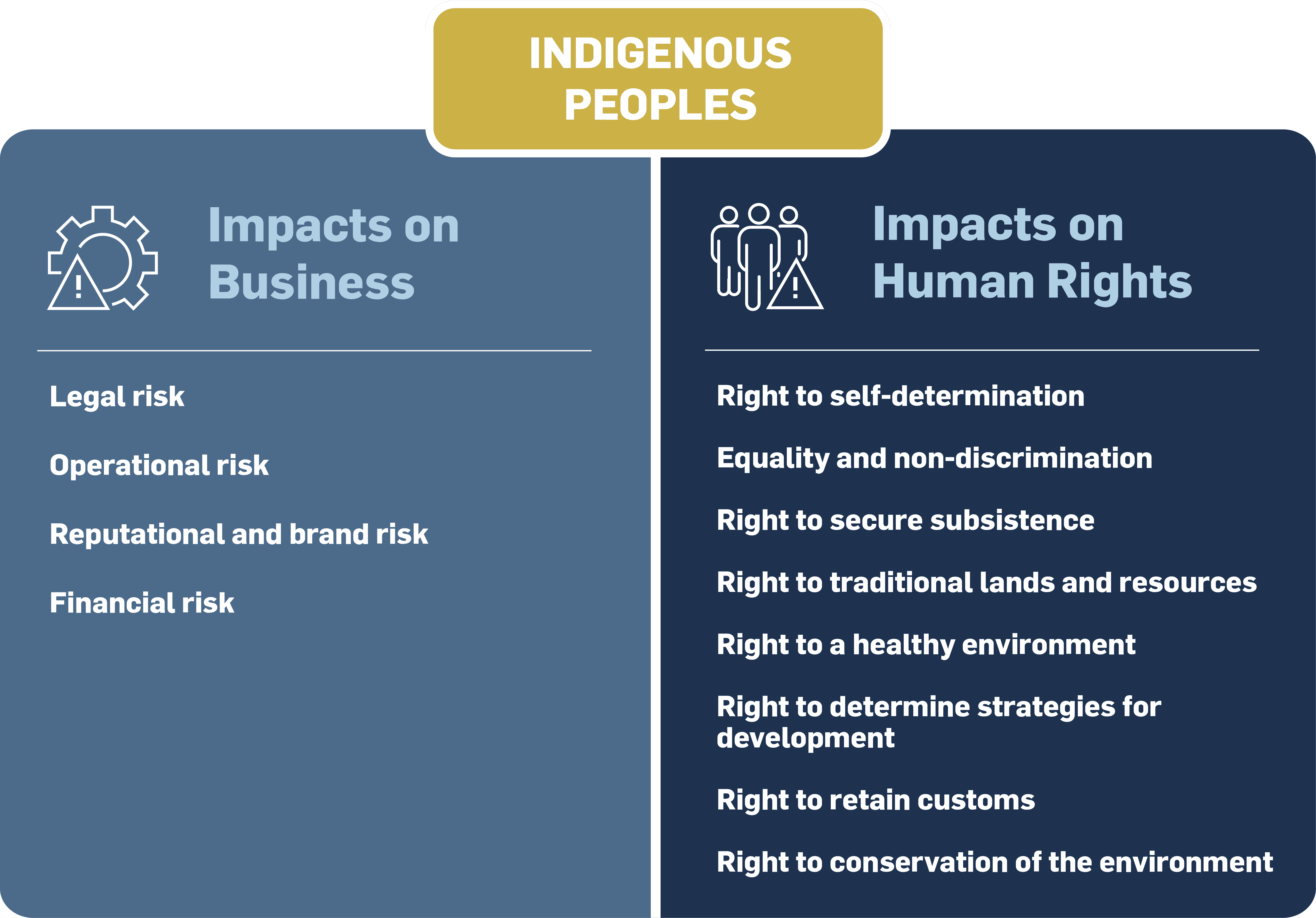
- Legal risk: Companies found to be complicit in Indigenous peoples’ rights violations in countries with well-established legislation and effective enforcement are likely to face serious legal repercussions. Failure to sufficiently comply with standards of consultation with Indigenous groups can carry litigation risks. Legal risks are further exacerbated if linked to serious abuses of Indigenous groups and environmental degradation.
- Operational risk: Companies involved in projects that do not sufficiently address Indigenous grievances may face operational disruptions in the form of blockades or other forms of boycott. Cases of Indigenous communities leading blockades have in the past resulted in workers being unable to access work sites. In extreme examples, blockades and protests have resulted in a moratorium on proposed projects — as can be seen in the Baram River dam project in Sarawak, Malaysia. In another high-profile case, increasing media scrutiny and Indigenous activism on the Juukan Gorge caves incident, in Australia, have resulted in the cessation of mining activity and the resignation of the responsible company’s CEO, Chairman and other senior executives.
- Reputational and brand risk: Companies may face reputational damage if they are found to be linked to instances of Indigenous rights violations. Indigenous groups and civil society groups that campaign on their behalf have been successful at shining a spotlight on corporate complicity in human rights abuses. This often results in severe reputational consequences, negative media coverage and brand contamination.
- Financial risk: Scrutiny arising out of activist campaigns or negative press coverage of companies found to be involved in infringements of Indigenous peoples’ rights can result in shareholder or investor pressure. Divestment and/or avoidance by investors and finance providers (many of which are increasingly applying environmental, social and governance (ESG) criteria to their decision-making) can result in reduced or more expensive access to capital.
Impacts on Human Rights
Restrictions to Indigenous peoples’ rights have the potential to impact a range of human rights,[1] including but not limited to:
- Right to self-determination (UNDRIP, Article 3; ICCPR, ICESCR, Article 1): Indigenous peoples should be able to freely determine their political status and pursue their economic, social and cultural development. However, they are often not able to participate fully in public life and are rarely pivotal in decision-making bodies of the State or senior levels of Government. Indigenous peoples have far less political leverage than other groups of society.
- Right to enjoy equality and non-discrimination (UNDRIP, Article 2; ILO Convention 169, Articles 3, 21 and 26): Indigenous peoples (particularly indigenous women) are often discriminated in their access to employment, education and vocational training.
- Right to be secure in subsistence and development (UNDRIP, Article 20): Indigenous peoples’ lands have been disproportionately affected by development activities because they often contain valuable natural resources including timber, minerals, biodiversity resources, water and oil. Land and resource issues are often at the crux of tensions between Indigenous communities and the general population.
- Right to traditional lands, territories and resources (UNDRIP, Article 26; ILO Convention 169, Articles 5, 14 and 15): Lands and territories have material, cultural and spiritual dimensions for Indigenous peoples. They are required for their survival and economic sustainability and are intrinsically linked to the identity and existence of communities. The social, cultural, religious and spiritual values and practices of Indigenous peoples should be recognized and protected.
- Right to conservation and protection of environment and productive capacity of lands, territories and resources (UNDRIP, Article 29): Many Indigenous peoples are highly dependent on their lands and natural resources and any changes to the ecosystem may impact their way of life and survival. Environmental degradation can result in serious impoverishment in Indigenous communities due to their strong reliance on the local ecosystem for their livelihoods.
- Right to determine and develop priorities and strategies for development (UNDRIP, Articles 20, 23 and 32; ILO Convention 169, Articles 7 and 16): Indigenous peoples should have the right to decide their own priorities for the process of development as it affects their lives, beliefs, institutions and spiritual well-being and the lands they occupy or use.
- Right to retain own customs and institutions (UNDRIP, Articles 5, 8 and 11; ILO Convention 169, Articles 8 and 9): Where the customs and traditions of Indigenous peoples are not incompatible with fundamental rights defined by the national legal system and with internationally recognized human rights, these should be protected and procedures should be established to resolve related conflicts.
Key Resources
The following resources provide further information on how businesses can identify and address violations of Indigenous peoples’ rights in their operations and supply chains:
- United Nations Global Compact, A Business Reference Guide: United Nations Declaration on the Rights of Indigenous Peoples: This is a valuable resource for businesses to understand, respect and support the rights of Indigenous peoples.
- Global Compact Network Australia (GCNA), The Australian Business Guide to Implementing the UN Declaration on the Rights of Indigenous Peoples: This guide is specifically targeted to Australian businesses with the GCNA having collaborated with the Indigenous Australian community. It provides practical advice about how executives and companies can understand, respect and embed the rights of Indigenous Australians into their daily operations.
- ILO, Understanding the Indigenous and Tribal Peoples Convention: This guide is a practical tool for ILO Constituents, including workers’ and employers’ organizations, to better understand the relevance, scope and implications of ILO Convention No. 169.
Definition & Legal Instruments
Definition
There is no single definition of Indigenous peoples adopted at the international level. ILO Convention No. 169 provides subjective and objective criteria for identifying Indigenous peoples. Self-identification is the sole subjective criteria, considered as fundamental, whereas the prescribed objective criteria are as follows:
- Indigenous peoples:
- Descend from populations who inhabited the country or geographical region at the time of conquest, colonization or establishment of present state boundaries;
- Retain some or all of their own social, economic, cultural and political institutions, irrespective of their legal status.
- Tribal peoples:
- Their social, cultural and economic conditions distinguish them from other sections of the national community.
- Their status is regulated wholly or partially by their own customs or traditions or by special laws or regulations.
In the African context, the African Commission on Human and Peoples’ Rights (ACHPR) issued an advisory opinion in 2007 on the UN Declaration on the Rights of Indigenous Peoples. The ACHPR emphasized that Indigenous peoples had a special attachment to and use of traditional lands and a state of subjugation, marginalization, dispossession, exclusion and discrimination due to their different culture, way of life and livelihoods. This opinion assigned comparatively less weight to the association of indigeneity with descent from the ‘first inhabitants’, because as the ACHPR stated, on these grounds and in the African context, most Africans consider themselves Indigenous.
Free, Prior and Informed Consent (FPIC)
According to the Expert Mechanism on the Rights of Indigenous Peoples (EMRIP), free, prior and informed consent (FPIC) is a manifestation of Indigenous peoples’ right to self-determine their political, social, economic and cultural priorities. It consists of three interrelated and cumulative rights of Indigenous peoples:
- The right to be consulted;
- The right to participate; and
- The right to their lands, territories and resources.
While States’ interpretations of FPIC vary, the right of Indigenous peoples to be consulted is firmly established under international law. The UNDRIP states that governments should obtain the FPIC of indigenous peoples for development projects. Governments should also provide redress when Indigenous cultural, intellectual property or genetic resources are taken without consent. Although ILO Convention No. 169 does not specifically contain the terminology of “free, prior and informed consent”, elements of consent requirements are present and do not preclude a substantive free, prior and informed consent-driven approach.
The Committee of Experts on the Application of Conventions and Recommendations (CEACR) has also stated that with regard to the right of consultation:
- Consultations must be formal, full and exercised in good faith; there must be a genuine dialogue between Governments and Indigenous and tribal peoples characterized by communication and understanding, mutual respect, good faith and the sincere wish to reach a common accord;
- Appropriate procedural mechanisms have to be put in place at the national level and they have to be in a form appropriate to the circumstances;
- Consultations have to be undertaken through Indigenous and tribal peoples’ institutions; and
- Consultations have to be undertaken with the objective of reaching agreement or consent to the proposed measures.
Legal Instruments
An ILO convention and a UN declaration form the international legal framework on Indigenous peoples’ rights and are used by most countries that recognize Indigenous peoples’ rights as guidance to their own national laws. These conventions outline rights specific to Indigenous peoples and serve as a framework for Indigenous and tribal empowerment.
- ILO Convention on Indigenous and Tribal Peoples, No. 169 (1989)
- UN Declaration on the Rights of Indigenous Peoples (UNDRIP)
To date, 24 countries have ratified ILO Convention No. 169. The Convention is legally binding upon the States that have ratified it and concrete steps need to be taken by them to ensure that their obligations under the Convention are effectively implemented at the national level. However, in many countries, there are still considerable challenges in terms of applying the Convention in law and practice, particularly regarding the right to consultation.
The UNDRIP, a non-binding instrument, is supported by most States and was adopted by the General Assembly in September 2007. The UNDRIP establishes a universal framework of minimum standards for the survival, dignity and well-being of the Indigenous peoples of the world. It elaborates on existing human rights standards and fundamental freedoms as they apply to the specific situation of Indigenous peoples.
Other Legal Instruments
The UN Guiding Principles on Business and Human Rights (UNGPs) set the global standard regarding the responsibility of businesses to respect human rights in their operations and across their value chains. The Guiding Principles call upon States to consider a smart mix of measures — national and international, mandatory and voluntary — to foster business respect for human rights. Businesses should consider the UNGPs in their operational and supply chain decisions, and when following national legislation.
Regional and domestic legislation
Companies are increasingly subject to non-financial reporting requirements and due diligence obligations in the jurisdictions in which they operate, which often include disclosures on their performance. There are several high-profile examples of national legislation that specifically mandate human rights-related reporting and other positive legal duties, such as due diligence, including the United Kingdom Modern Slavery Act 2015, Australian Modern Slavery Act 2018, the California Transparency in Supply Chains Act 2010, the French Corporate Duty of Vigilance Law 2017, the German Act on Corporate Due Diligence Obligations in Supply Chains 2023 and the Norwegian Transparency Act 2022.
The EU Corporate Sustainability Due Diligence Directive (CSDDD) entered into force in July 2024 and was amended in February 2026. The Directive introduces mandatory human rights and environmental due diligence requirements for large companies operating in or doing business within the EU, and applies across companies' operations, supply chains and certain downstream business activities. EU Member States must transpose the Directive into national law by July 2028. In-scope companies must have their due diligence systems in place and operational by July 2029.
These mandatory due diligence and disclosure laws require companies to publicly communicate their efforts to address actual and potential human rights impacts, including violations in relation to freedom of association. Failure to comply with these obligations leads to real legal risk for companies.
The Canada-United States-Mexico- Agreement (CUSMA) entered into force in July 2020. It seeks to address 21st century trade issues and promote trade opportunities, by increasing engagement with Indigenous peoples in trade and investment to ensure their interests are reflected.
Contextual Risk Factors
Several underlying factors drive Indigenous rights violations, including the following:
- Inadequate legal framework and weak government policy offer poor protections for Indigenous peoples. Some countries fail to recognize Indigenous identity altogether or ignore specific Indigenous concerns or ways of life, leading to infringements on Indigenous rights. Even in countries where there are specific legislative protections, they may be inadequate in that they recognize some aspects of Indigenous rights but not others. The absence of regulations to implement consultations with Indigenous peoples in development projects that take place in traditional lands, for instance, has legal implications for private sector actors operating in countries that have ratified ILO Convention No. 169.
- Weak enforcement of Indigenous rights laws due to a poor understanding of these laws and Indigenous cultures, inadequate training or resources, and conflicting economic and political priorities. High levels of corruption may also contribute to Indigenous rights violations, for example, in issuing land permits in traditional Indigenous areas. In addition, a lack of understanding of Indigenous peoples’ rights among various stakeholders, including local or national policymakers, the wider public and private sector actors, contributes to ongoing prejudice and discrimination against Indigenous communities. For instance, deep-rooted and widespread marginalization faced by Indigenous peoples is a key factor behind the disproportionately high number of Indigenous peoples in custody in some countries.
- Failure to comply with the duty to consult Indigenous peoples is another key risk factor. While countries may recognize some aspects of Indigenous rights, specific laws that guarantee the right to be consulted with are not widespread. Consultations with Indigenous peoples should take place through appropriate procedures that foster a climate of mutual trust. Engagement must ensure that Indigenous peoples have all the relevant information and sufficient time to allow them to engage their own decision-making processes and participate effectively in decisions taken, in a manner consistent with their cultural and social traditions. Without such guarantees, there is a higher risk of Indigenous rights violations.
- Conflicting priorities between disparate local community stakeholders run the risk of strengthening existing tensions or antagonizing portions of the population. In many cases, local communities may consist of both Indigenous and non-Indigenous peoples. Differing priorities between competing groups, for example on infrastructure projects, have the potential to result in conflict if not managed carefully by companies.
- Poor environment for land rights where traditional Indigenous lands are poorly documented and/or ambiguous. Insecure land tenure due to lack of recognition of Indigenous traditional land tenure, land grabbing and forced displacement, or lack of clear land titles increase the risk of land conflict.
- A poor environment for civil and political rights can also threaten Indigenous rights. The risk of Indigenous rights violations tends to be higher in repressive countries where, for example, the civic space is shrinking and Indigenous human rights and environment defenders face reprisals and retaliation. In some countries, socio-environmental conflicts may result in abuses by security forces or the militarization of indigenous territories.
- Lack of institutional culture or specialist skills within businesses may hinder meaningful relationships with Indigenous groups. Establishing effective engagement may be even more challenging given a wide range of Indigenous governance structures.
Industry-specific Risk Factors
While challenges to protecting or securing Indigenous peoples’ rights are present in many industries, the following sectors present particularly significant levels of risk: agriculture/agribusiness, infrastructure and extractives, which are outlined in detail below. However, Indigenous peoples are also impacted by other sectors, including tourism and travel. To identify potential risk factors for other industries, companies can access the CSR Risk Check.
Agriculture/Agribusiness
According to the UN, Indigenous peoples are particularly impacted by large-scale agriculture development projects that are implemented without their free, prior and informed consent.
Agriculture-specific risk factors include the following:
- Encroachment onto Indigenous land: As a land-intensive industry, agricultural or agribusiness development projects have the potential to encroach on Indigenous land. Failure to understand Indigenous-specific rights, such as their rights over their traditional lands and territories, or the principle of FPIC, is common, particularly when operating in countries with poor Indigenous rights’ protections or legal standards.
- Remoteness of projects: Projects often take place in remote or low governance areas. Due to the geographical isolation of many Indigenous areas, it is often difficult for Indigenous peoples to access justice or remedy when confronted with abuses of their human rights, such as illegal encroaching, land grabbing or forced displacement.
- Subsidies: High export subsidies and domestic support provided to agribusiness corporations have resulted in the loss of livelihoods for many Indigenous communities. For example, the UN notes that Indigenous corn producers in Mexico have experienced the loss of livelihood due to the dumping of cheap, highly subsidized corn from the USA.
Infrastructure
The UN reports that mega infrastructure projects such as large dams have disproportionately impacted Indigenous peoples. Large hydropower dams, road and rail infrastructure and power lines have resulted in the loss of Indigenous land and livelihood, cultural loss and human rights abuses.
Infrastructure-specific risk factors include the following:
- Drive for clean or renewable energy: The push for clean or renewable energy has been reported to drive human rights violations, including against Indigenous peoples. The Business and Human Rights Resource Centre states that following an increase in investment in renewable energy in the aftermath of the Paris climate agreement and the launch of the 2030 Agenda for Sustainable Development, allegations of human rights abuses linked to renewable projects have been rising. Inadequate human rights due diligence and impact assessment procedures are behind many such allegations. For example, the Business and Human Rights Resource Centre reported that nearly a quarter (24%) of abuses against social rights and livelihoods in Mexico are linked to the solar industry.
- Health risks: Hydroelectric projects have been linked to serious health risks, negatively impacting Indigenous communities living in proximity to such developments. A 2016 Harvard study found that when dams are built for hydroelectric projects, naturally occurring mercury in soils is converted into methylmercury, a toxin linked to deterioration in water quality. This water pollution is then linked to serious health risks such as cardiovascular disease and neurodevelopmental delays in children.
- Safety concerns: Infrastructure projects have also been linked to other safety concerns. For example, Minority Rights Group reported that in 2018, water released from a hydroelectric project on the river Doyang in Nagaland, India, flooded 10,000 hectares and affected thousands of people, many of whom were Indigenous, by destroying their houses, factories and fields. Hydroelectric projects have also been linked to landslides.
- Road projects: New road construction projects have also been linked to Indigenous rights violations. The Trans-Papua Highway project, a 2,700-mile road network built across West Papua in Indonesia is one such example. The massive infrastructure project is a key driver of ongoing conflict and deforestation, with no consultation held with Indigenous Papuan groups. Civil society groups reported that the infrastructure project is unlikely to benefit Indigenous Papuans, but instead threatens their economic well-being.
Mining and the Extractives Industry
The extractives sector has frequently been linked to Indigenous rights violations. High-profile cases have seen egregious human rights violations, including the use of lethal force or targeted killings of Indigenous activists or human rights defenders. Forced displacement of Indigenous communities has resulted in prolonged conflict and societal upheaval.
Extractives-specific risk factors include the following:
- Cultural rights impacted: Since mining operations are often located in or close to Indigenous lands, they have the potential to impact the cultural rights of Indigenous peoples — see case study on Rio Tinto and Juukan Gorge.
- Mining waste: Improper management or disposal of mining waste has led to contamination of water, livelihood destruction and displacement of Indigenous communities. Structural issues with tailings dams (e.g. collapses) disproportionately impact Indigenous communities who then face the worst effects of environmental damage and degradation of lands that are necessary for their material or cultural survival.
- Water use: The vast amount of water required in mining operations may result in water shortages faced by Indigenous communities and affect their livelihoods, including their own agriculture. Lithium mining operations in Chile’s Atacama Desert, for example, have negatively impacted Indigenous peoples’ customs and farming. Similar to land, water may have spiritual and cultural value to Indigenous peoples. As a result, the industry’s heavy reliance on water may lead to infringement of Indigenous rights to traditional lands, territories and resources.
- Security forces: The use of both public and private security forces in guarding mine sites, particularly in countries where they are known to resort to violent or repressive measures, puts Indigenous communities at high risk of serious human rights abuses. Indigenous peoples have been targeted for killings, torture, arbitrary arrest and intimidation by security forces for voicing their opposition to mining operations in their traditional lands.
Due Diligence Considerations
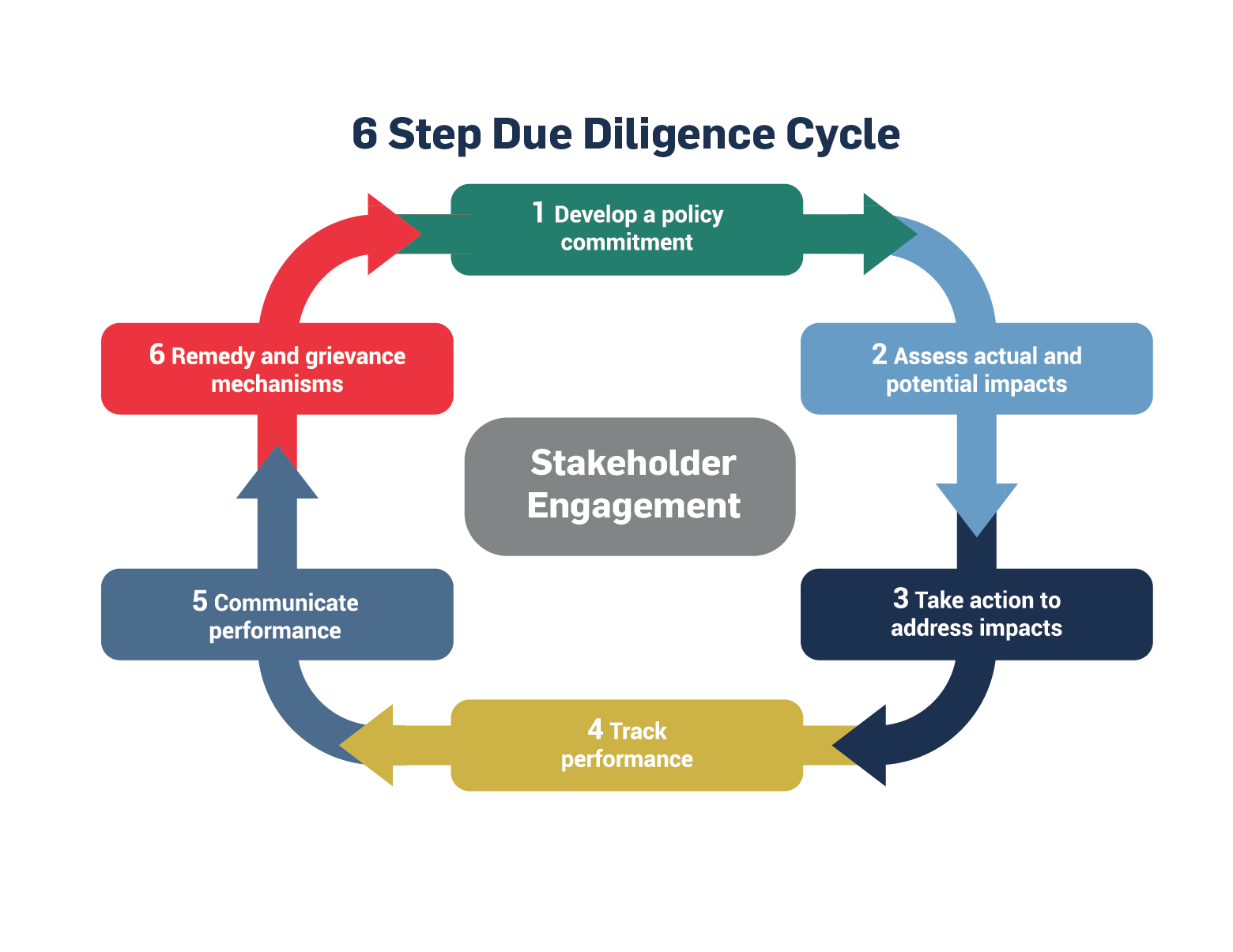
This section outlines due diligence steps that companies can take to respect Indigenous peoples’ rights in their operations and supply chains. The described due diligence steps are aligned with the UN Guiding Principles on Business and Human Rights (UNGPs). Further information on UNGPs is provided in the ‘Key Human Rights Due Diligence Frameworks’ section below or in the Introduction.
While the below steps provide guidance on respecting Indigenous peoples’ rights, in particular, it is generally more resource-efficient for companies to ‘streamline’ their human rights due diligence processes by also identifying and addressing other relevant human rights issues (e.g. child labour, forced labour, discrimination, freedom of association) at the same time.
Companies can seek specific guidance on this and other issues relating to international labour standards from the ILO Helpdesk for Business. This Helpdesk assists company managers and workers that want to align their policies and practices with principles of international labour standards and build good industrial relations.
The UN Global Compact Business Reference Guide on UNDRIP is a valuable resource for companies to understand, respect and support the rights of Indigenous peoples, with advice specific to business activities. Businesses can use the UN Global Compact Business Guide on UNDRIP in conjunction with the UNGP framework to conduct human rights due diligence on Indigenous peoples’ rights. The guide lays out key business actions to take, including developing policy commitments, conducting human rights due diligence, implementing FPIC, providing remediation and access to grievance mechanisms.
Additionally, the SME Compass offers guidance on the overall human rights due diligence process by taking businesses through five key due diligence phases. The SME Compass has been developed in particular to address the needs of SMEs but is freely available and can be used by other companies as well. The tool, available in English and German, is a joint project by the German Government’s Helpdesk on Business & Human Rights and the Deutsche Gesellschaft für Internationale Zusammenarbeit (GIZ) GmbH.
1. Develop a Policy Commitment on Indigenous Peoples’ Rights
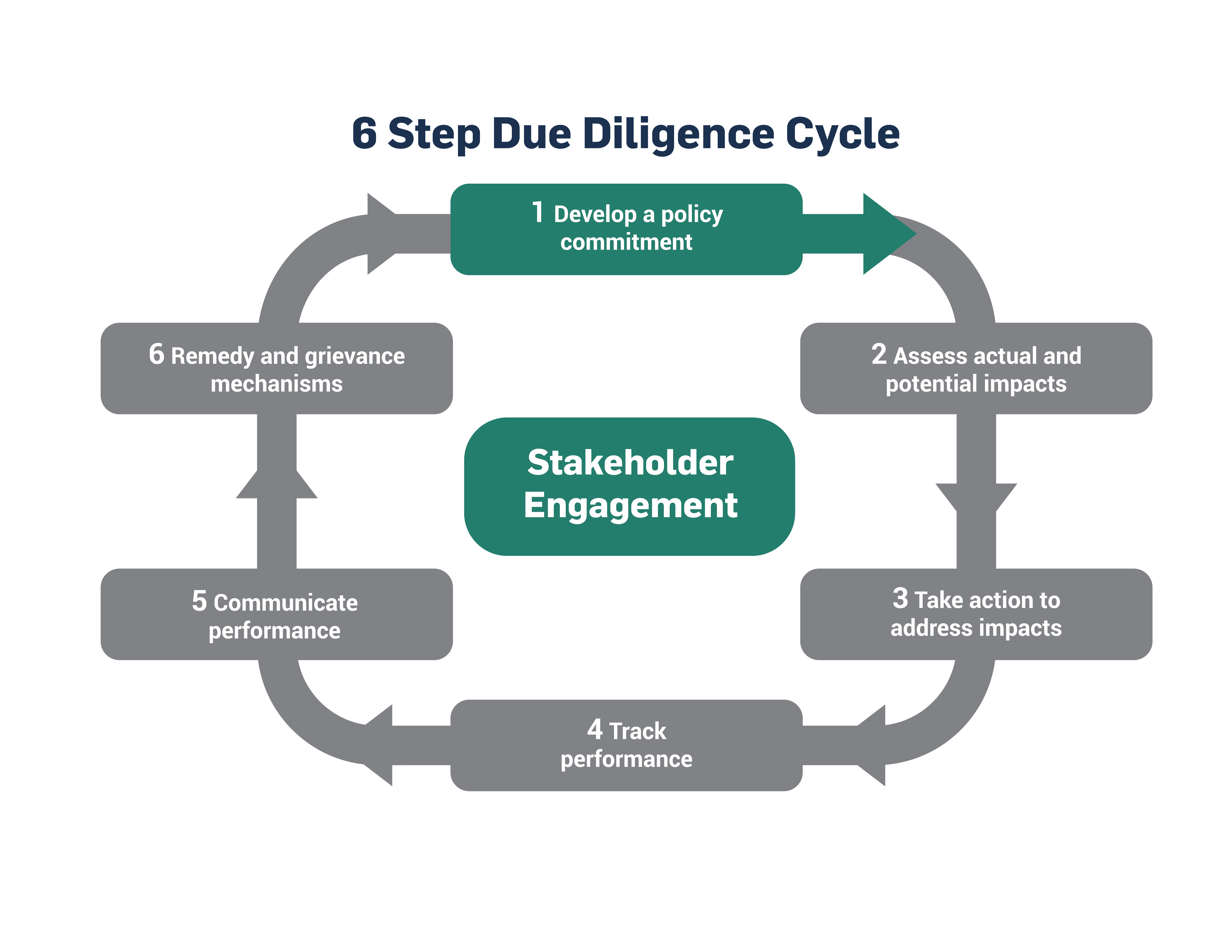
Companies should consider adopting a human rights policy that respects and protects Indigenous peoples’ rights. Although some companies, particularly in the mining industry, have developed stand-alone policies on Indigenous peoples (e.g. BHP), it is most common for businesses to integrate commitments to Indigenous peoples rights in a human rights policy (Hess, Mitsui and Equinor) or another policy document governing the relationship between the company and Indigenous and other local communities (Rio Tinto).
The UN Global Compact Business Reference Guide on UNDRIP advises that in circumstances where specific provisions are required on the company’s relationships with Indigenous peoples, Indigenous representatives and human rights experts should be involved in the development of the policy. Once a company has an Indigenous peoples’ rights policy, it would be good practice to require business partners, such as sub-contractors and joint venture partners, to adhere to the policy and support them in developing their own policies. Some of the actions recommended by the UN Global Compact Business Reference Guide on developing an Indigenous peoples’ rights policy include:
- Assigning senior management responsibility to drive, implement and review existing or any new policies;
- Mapping and studying existing policies to identify existing coverage of Indigenous peoples’ rights and gaps;
- Involving all relevant parts of the business, including the core business as well as human resources, corporate affairs, legal, procurement and security, in the process of developing, implementing and reviewing the policy; and
- Involving internal and external stakeholders in the process, in particular, local Indigenous communities that the business interacts and works with.
2. Assess Actual and Potential Impacts on Indigenous Peoples’ Rights
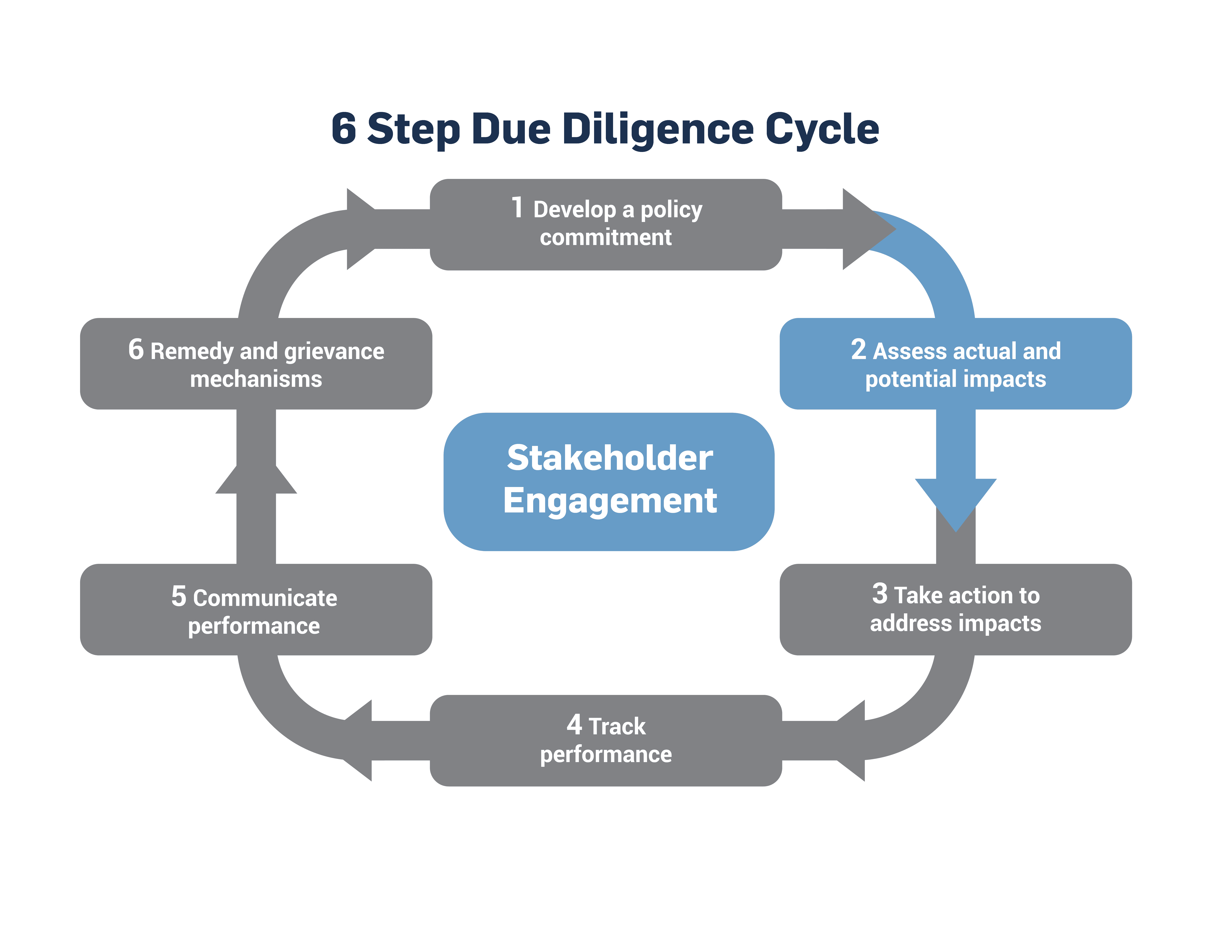
Companies should undertake an assessment of their actual and potential impacts on the rights of Indigenous peoples focused on their own business activities and their relationships with third parties, including business partners. The UNGPs emphasize that appropriate action will vary according to (i) whether the business enterprise causes or contributes to an adverse impact, or whether it is involved solely because the impact is directly linked to its operations, products or services by a business relationship; and (ii) the extent of its leverage in addressing the adverse impact. As such, these two elements must be considered when conducting impact assessments.
Companies can refer to the UN Global Compact Business Reference Guide on UNDRIP for key recommendations on conducting impact assessments. The guide specifies that impact assessments should continue throughout the duration of the business project and thereafter, as necessary, to ensure that all project impacts are documented.
Impact assessments can range from a high-level desk-based assessment to a much more in-depth exercise based on on-the-ground reconnaissance, direct consultation of indigenous communities, a search of government documents (including, for example, land registry records), engagement with local civil society stakeholders and, if relevant, other businesses operating in the area.
Companies can assess Indigenous peoples’ rights in countries where they operate and source from by consulting country risk profiles. Two credible civil society resources regarding Indigenous peoples’ rights are ‘The Indigenous World’ — annual publications by the International Work Group for Indigenous Affairs (IWGIA) — and Minority Rights Group’s ‘World Directory of Minorities and Indigenous Peoples.’ These resources give insight into where the highest risk regions and countries are, and outline trends with respect to Indigenous peoples’ rights.
3. Integrate and Take Action on Indigenous Peoples’ Rights
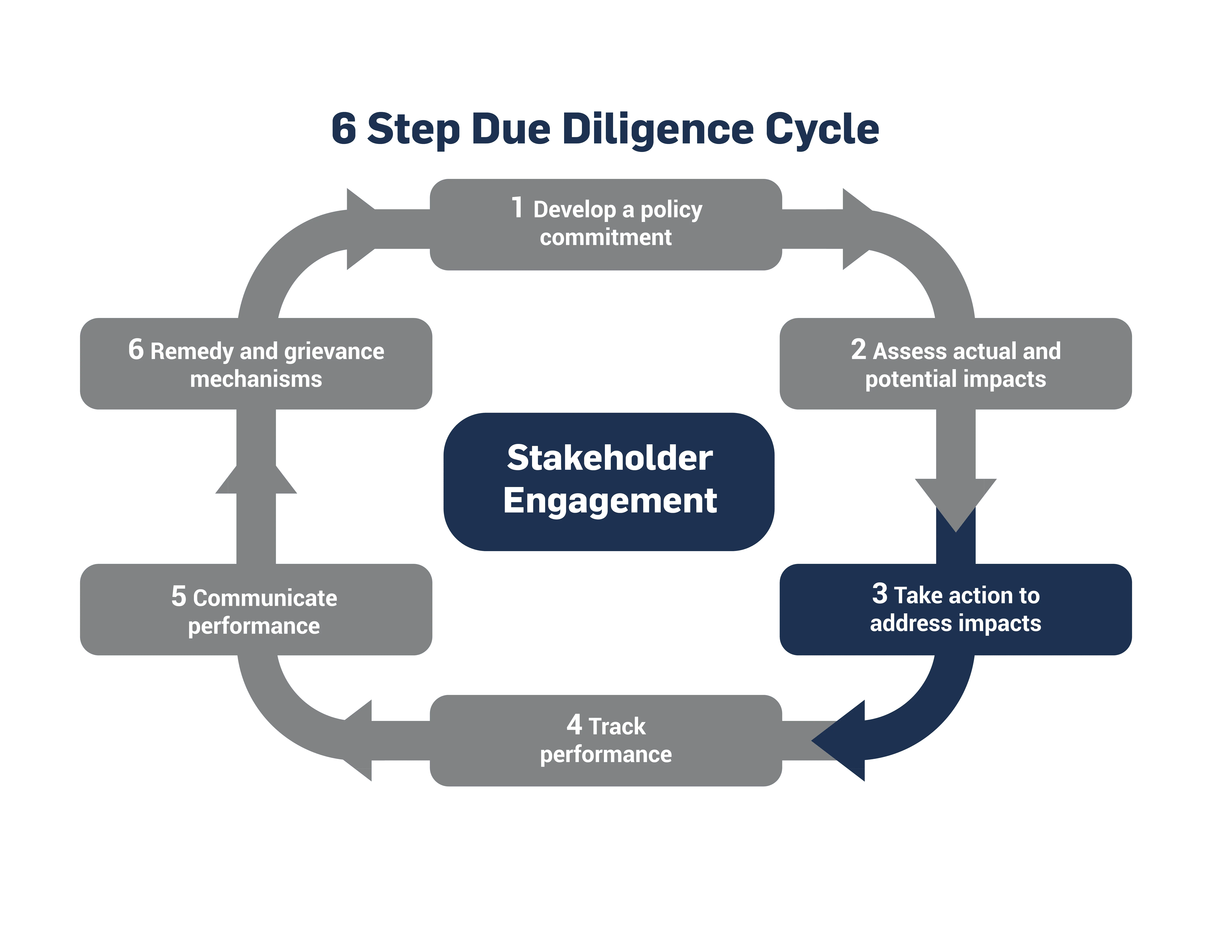
The guide on Indigenous peoples developed by the Danish Institute for Human Rights (DIHR) has actionable and step-by-step recommendations on how companies can exercise due diligence and develop and implement action plans. Ensuring adequate consultation is an essential first step that will decisively inform a company’s action plan on Indigenous peoples. Indigenous peoples should be consulted with a view to obtaining an agreement or consent, and consultation should be undertaken in accordance with international standards prior to definite decision-making regarding project feasibility.
Companies can refer to the UN Global Compact Business Reference Guide on UNDRIP for key recommendations on understanding and implementing consultation processes to secure FPIC. The guide recommends the following business actions in relation to FPIC:
- Consider engaging an independent and culturally sensitive facilitator, for example, local non-governmental organizations (NGOs) and/or independent experts, chosen by or acceptable to the Indigenous peoples concerned, to assist with negotiations or consultation processes. This should be done in a manner that does not influence who they choose to involve, nor influences the views of the provider of these services.
- Consider providing support (e.g. financial, logistical, etc.) to strengthen the capacity of a community’s decision-making processes, being mindful that doing so does not create undue pressure to give consent.
- Consider making arrangements for independent monitoring of the FPIC process and its outcomes, by engaging an independent expert chosen in consultation with the Indigenous peoples concerned.
A useful checklist for appraising whether an activity requires an FPIC process is included in the UNDP guide.
4. Track Performance on Indigenous Peoples’ Rights
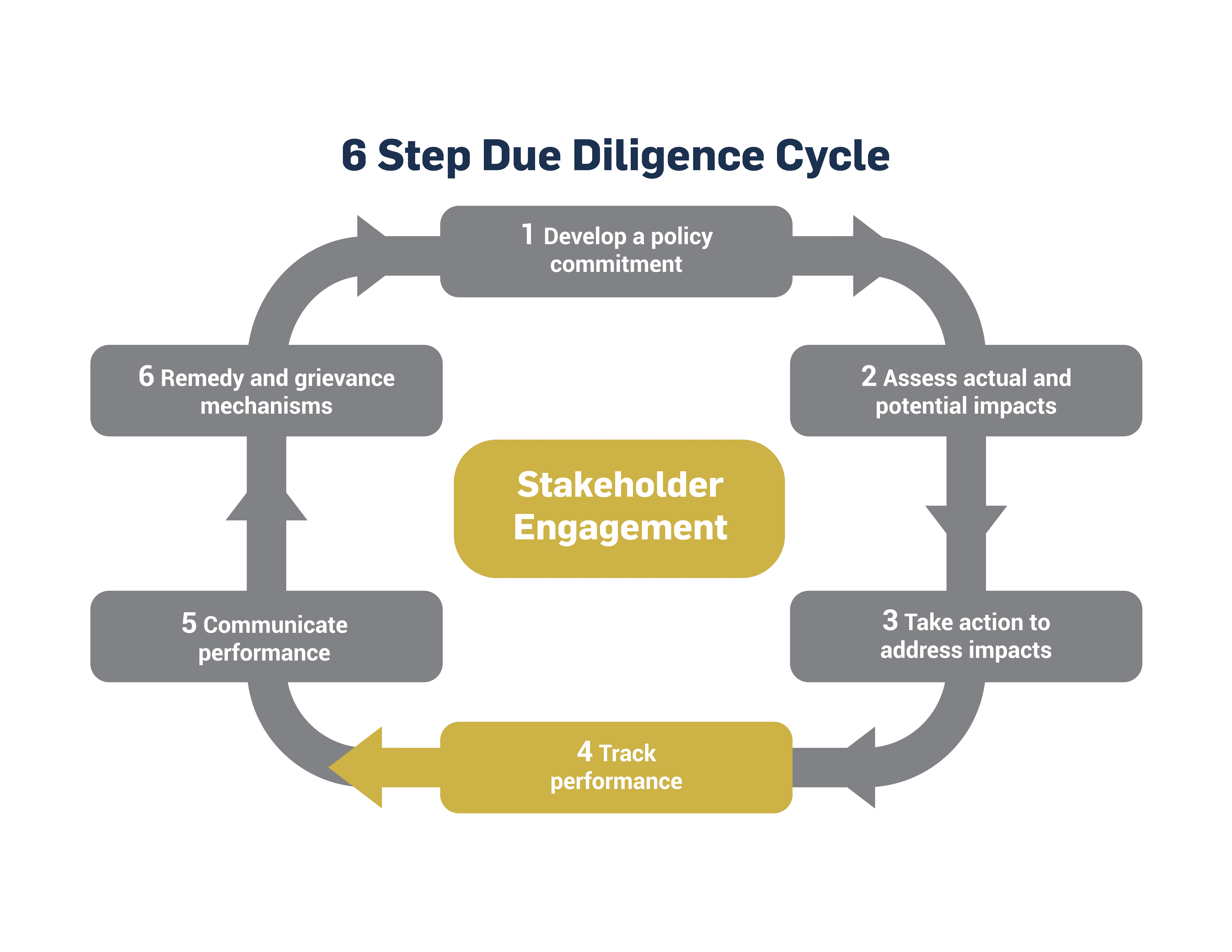
Businesses should regularly review their approach to Indigenous peoples’ rights to see if it continues to serve the Indigenous communities and stakeholders involved. The guide on Indigenous peoples developed by DIHR provides an actionable checklist that companies can refer to when tracking performance on Indigenous peoples’ rights, including considerations such as:
- Has a specific plan for engagement with Indigenous peoples been developed and agreed upon with concerned indigenous peoples/communities?
- Has a participatory monitoring strategy been put in place to track performance against key risks or potential impacts identified?
Participatory monitoring of environmental and social commitments can increase transparency and promote trust between a company and local community members. It can help defuse external criticism, quash unfounded rumours within the community and ensure higher levels of ‘buy-in’ from local people. Participatory monitoring may include:
- The participation of Indigenous representatives in scientific sampling and analysis, alongside a company’s own environmental team. In many cases, the company will need to ensure that capacity building is carried out by an independent third party to ensure such representatives are able to participate in this process fully and effectively.
- Validation of initial impact assessment by indigenous community members and a joint analysis of the company’s management and mitigation efforts based on the records on impacts on affected community members.
- Assessing company/project-related changes to the local environment and socio-economic context over time with the input from Indigenous community members.
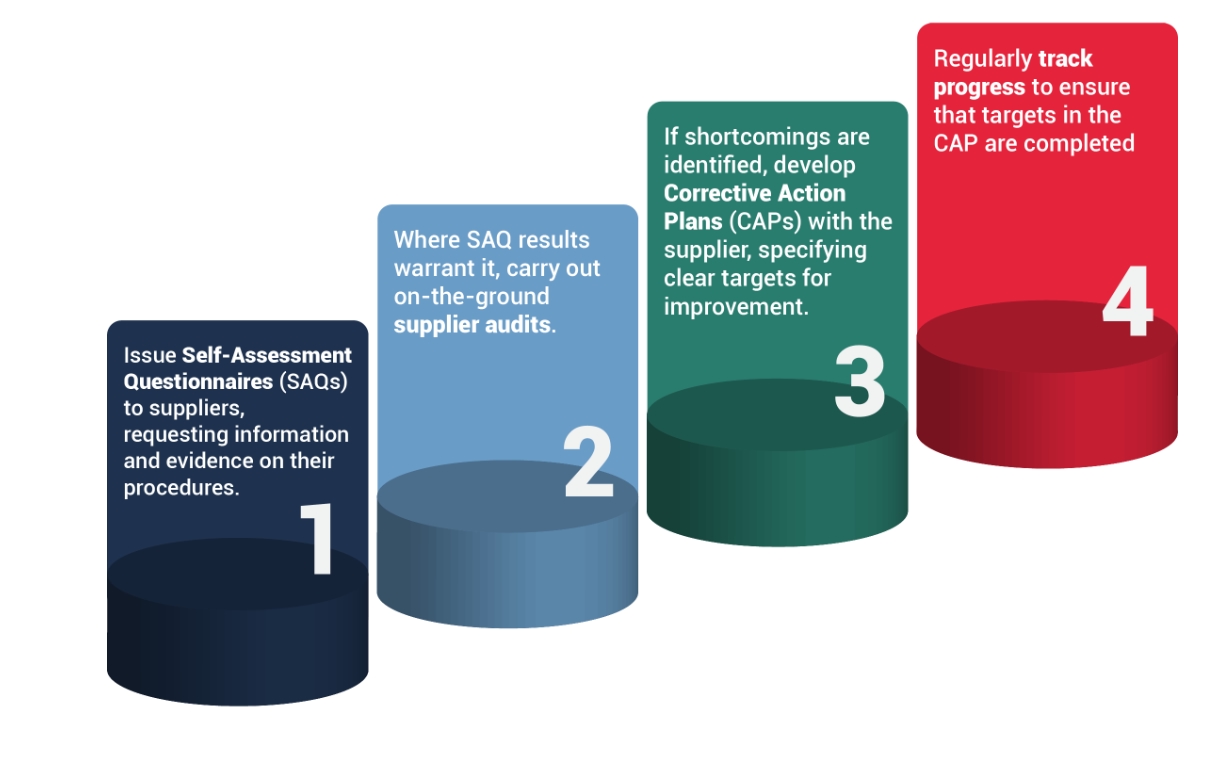
5. Communicate Performance on Indigenous Peoples’ Rights
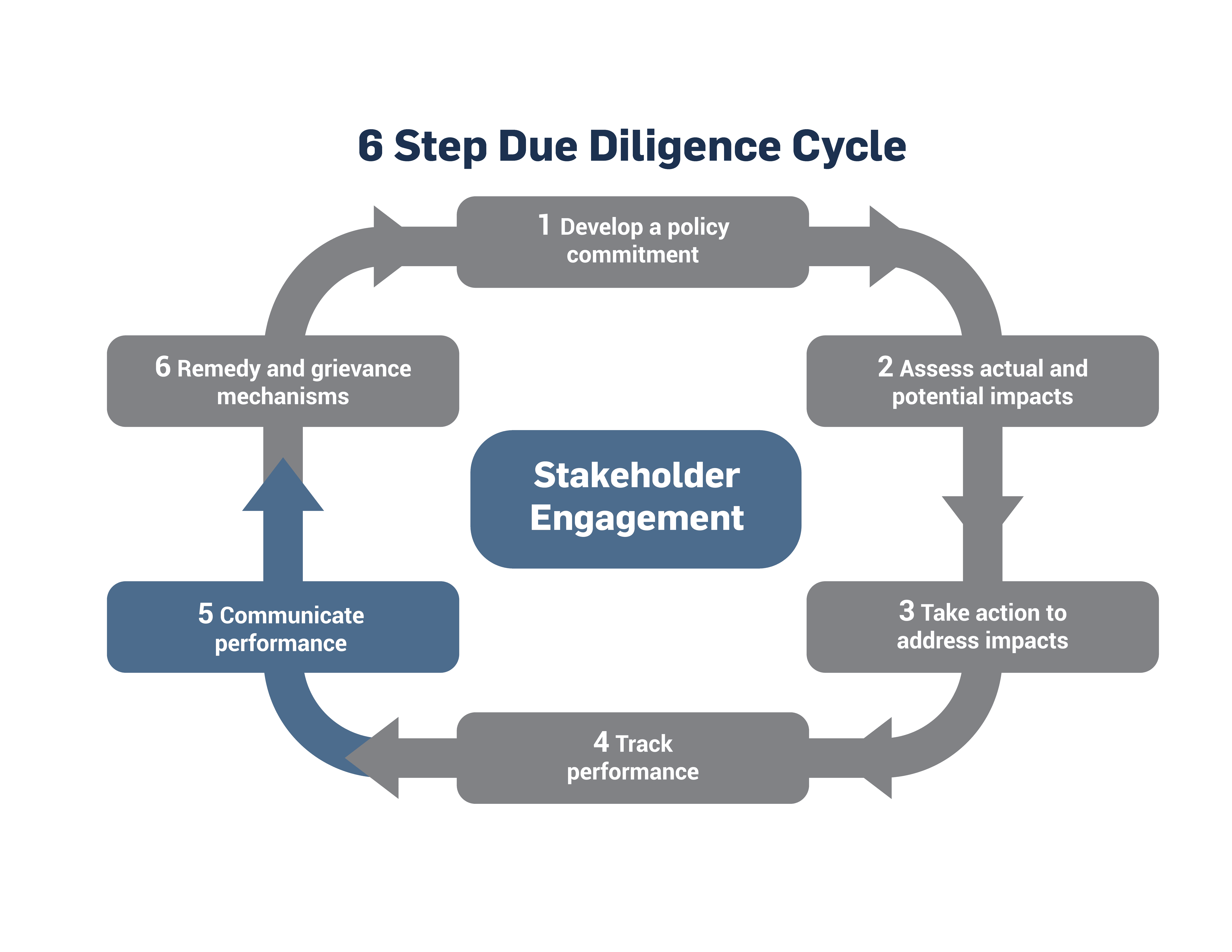
Companies are expected to communicate their performance on Indigenous peoples’ rights in a formal public report, which can be achieved via companies’ broader sustainability or human rights reporting (e.g. Shell’s Sustainability Report), or in their annual Communication on Progress (CoP) in implementing the Ten Principles of the UN Global Compact. Additionally, other forms of communication may include in-person meetings, online dialogues and consultation with affected stakeholders.
6. Remedy and Grievance Mechanisms
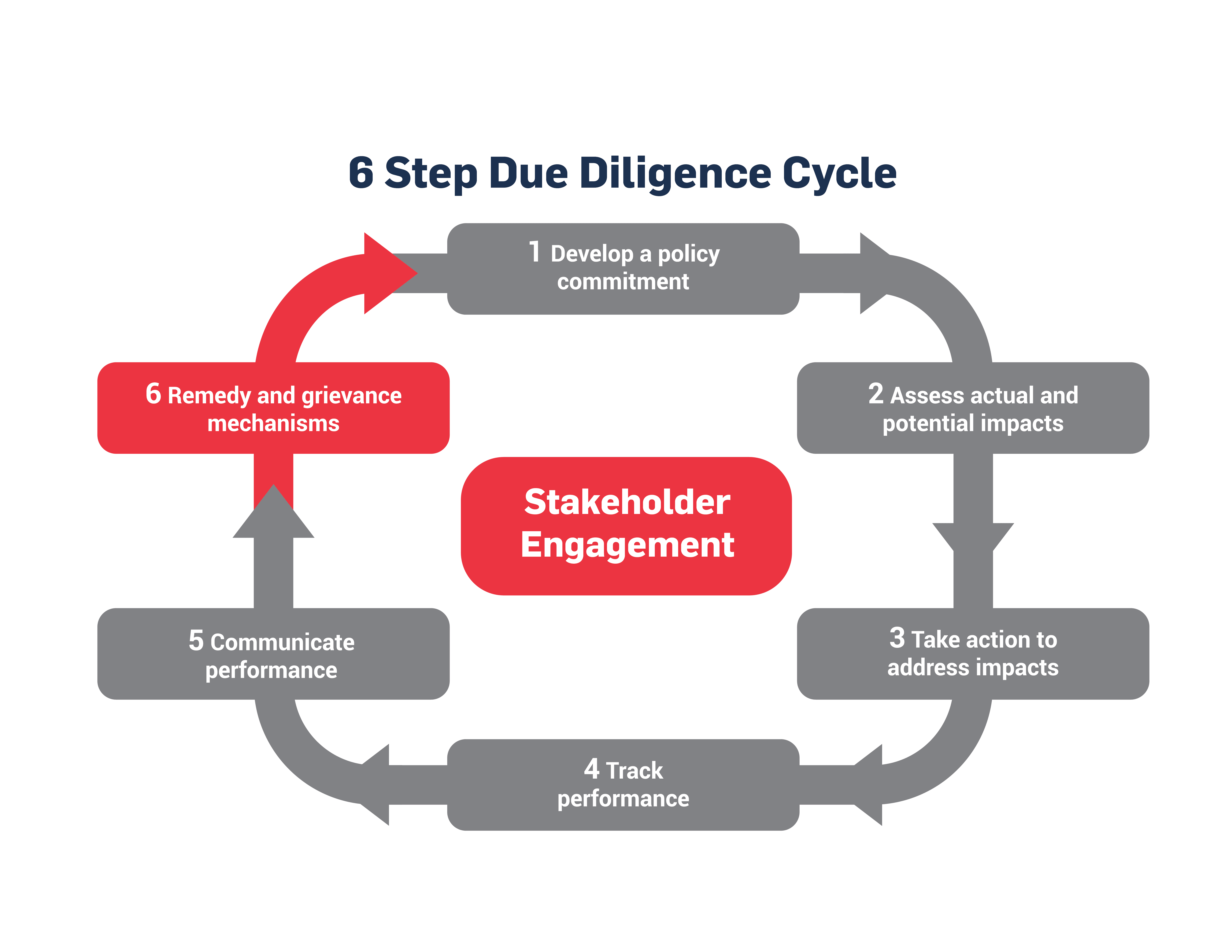
Grievance mechanisms help build trust and understanding of issues between companies and Indigenous peoples. They provide an early point of recourse to identify and address the concerns of impacted Indigenous communities before the point of escalation. These channels also help develop stronger relationships with Indigenous communities. It is a good practice for companies to involve local communities and respected third parties in the design and implementation of the grievance mechanism, and to consider establishing a grievance process that is run by a respected, independent body. Another best practice is to ensure that grievance mechanisms are accessible to all Indigenous peoples, including women, youth, elders and other potentially vulnerable groups.
Grievance mechanisms will vary depending on whether a company has caused, contributed or is directly linked to the adverse impact on Indigenous peoples. Global Compact Australia’s guide has a helpful visual (p. 9) explaining the “cause, contribute and directly linked” continuum and specifying appropriate remediation strategies in each case. Companies can also refer to the UN Global Compact Business Reference Guide on UNDRIP for key recommendations on how to establish culturally appropriate and effective grievance mechanisms for Indigenous communities.
Grievance mechanisms are crucial to ensure effective remediation of negative impacts on Indigenous peoples. The inclusion of Indigenous peoples in the remediation process and the enhancement of local ownership of the process ensures the acceptance and legitimacy of a remediation plan. Indigenous involvement in the remediation process can also help businesses develop remediation plans that best suit the needs of a particular Indigenous community.
Case Studies
This section includes examples of company actions to prevent violations of Indigenous peoples’ rights in their operations and supply chains.
Further Guidance
- DIHR, Introducing the Indigenous Navigator’s Human Rights and Environmental Due Diligence Module: This resource is designed to support Indigenous Peoples in monitoring business related impacts on their rights and assessing the degree to which states are implementing their State obligations to regulate, prevent, and remedy corporate-related harms in line with Indigenous rights and environmental standards.
- ILO, Excerpts from Reports and Comments of the ILO Supervisory Bodies: Applying the Indigenous and Tribal Peoples Convention, 1989 (No. 169): Organized in a thematic and chronological manner, this document seeks to disseminate the comments and recommendations of the ILO supervisory bodies in the context of the application of ILO Convention No. 169.
- ILO, Implementing the ILO Indigenous and Tribal Peoples Convention No. 169: Towards an Inclusive, Sustainable and Just Future: This report presents the social and economic situation of Indigenous women and men by looking at key aspects such as population, employment and poverty, as well as the important strides made in public policies, particularly with regard to institutions, consultation and participation.
- IWGIA and ILO, The Impact of COVID-19 on Indigenous Communities: Insights from the Indigenous Navigator: This report highlights the differentiated impact that COVID-19 has on Indigenous peoples.
- IWGIA and ILO, Indigenous peoples in a changing world of work: Exploring indigenous peoples’ economic and social rights through the Indigenous Navigator: This report explores the obstacles faced by Indigenous peoples in performing their traditional occupations and accessing decent work opportunities, education, and social protection.
- ILO, Exploring and Tackling Barriers to Indigenous Women’s Participation and Organization: This study aims to identify and analyze barriers to participation and organization faced by indigenous women at multiple levels.
- ILO, Indigenous Peoples and a Just Transition for All: This policy brief presents the linkages between just transition and Indigenous peoples, and provides key policy recommendations for implementing social dialogue to ensure a just transition for all.
- IFAD, Policy on Engagement with Indigenous Peoples: 2022 Update: This policy provides an overview on the principles of engagement when working with Indigenous peoples and the instruments, procedures and resources IFAD will use to implement these principles.
- United Nations Global Compact, Practical Supplement: Business Reference Guide to the UNDRIP: This resource compiles a list of business practices to raise awareness of the corporate responsibility to respect Indigenous peoples’ rights and the opportunity to support these rights.
- United Nations Global Compact, Indigenous Peoples’ Rights and the Role of Free, Prior and Informed Consent: This note explores the business case for obtaining FPIC and the challenges that are likely to arise in the process. It outlines current company good practices to obtain FPIC and discusses emerging practices that not only support FPIC but also provide long-term benefits for affected Indigenous communities.
- United Nations, State of the World’s Indigenous Peoples: This report promotes awareness of Indigenous peoples’ issues within the UN system, with States, academia and the broader public.
- United Nations, Free, Prior and Informed Consent of Indigenous Peoples: This resource provides companies with an understanding of FPIC.
- International Finance Corporation (IFC), Standard 7 — Indigenous Peoples: The IFC has developed a guidance note for its clients in aid of implementing IFC Performance Standard 7 on Indigenous peoples’ rights. Companies can use this resource to ensure that business activities minimize negative impacts, foster respect for human rights, dignity and culture of Indigenous populations, and promote development benefits in culturally appropriate ways.
- IFC, Stakeholder Engagement: A Good Practice Handbook for Companies Doing Business in Emerging Markets: This guide provides useful advice on how companies can engage with stakeholders, including specific recommendations on how to consult with Indigenous communities.
- IFC, Investing in People: Sustaining Communities through Improved Business Practice: The IFC created this guide as a resource to help IFC clients and other companies establish effective community development programmes for communities located near or affected by their operations, including Indigenous peoples.
- SME Compass, Due Diligence Compass: This online tool offers guidance on the overall human rights due diligence process by taking businesses through five key due diligence phases.
- SME Compass, Standards Compass: This online tool offers guidance on what to pay attention to when selecting sustainability standards or when participating in multi-stakeholder initiatives. It allows comparing standards and initiatives with respect to their contribution to human rights due diligence and their potential limitations.
- SME Compass, Downloads: Practical guides and checklists are available for download on the SME compass website to embed due diligence processes, improve supply chain management and make mechanisms more effective.
- ILO Helpdesk for Business, Country Information Hub: This resource can be used to inform human rights due diligence, providing specific country information on different labour rights.
References
- By introducing the due diligence-based corporate responsibility to respect human rights, the UN Guiding Principles on Business and Human Rights (UNGPs) shift the focus from impacts on businesses to impacts on human rights. Further information on the UNGPs is included in section ‘Due Diligence Considerations’.